Pages

Showing posts with label life that books built. Show all posts

Tuesday, 8 September 2015

The Black Lotus Blog Tour: My Life That Books Built by Kieran Fanning

Last month I posted my review of Kiean Fanning's brilliant new ninja time travel adventure story, The Black Lotus. Today I am overjoyed to be welcoming Kieran to The Book Zone to tell us about the books he enjoyed reading when he was younger:


One of the first books I remember being genuinely moved by was The Children at Green Meadows by Enid Blyton. I was a huge Enid Blyton fan and read all The Secret Seven series. The Famous Five series was also a firm favourite, especially as the show was on TV.


We also had some abridged illustrated classics at home, like Treasure Island, King Solomon’s Mines, and The Last of the Mohicans. I think I enjoyed the illustrations more than the stories but they did prompt me to revisit these titles when I got older and Treasure Island is still one of my all-time favourites.

We loved comics in our house too, though we weren’t allowed to buy them often. Our neighbour however, got comics every week so when he was finished with them we received bundles of the Beano, the Dandy, Roy of the Rovers and Thundercats.

Our mother also encouraged us to read Irish books and I loved Tom McCaughren’s fox series beginning with Run with the Wind. I also vividly remember Carolyn Swift’s Robbers series and Island of the Great Yellow Ox by Walter Macken.


Roald Dahl has to be on this list too, my favourites from him being Danny the Champion of the World and James and the Giant Peach.

I also have great memories of books in school. Every day we used to look forward to the teacher reading us Charlotte’s Web or The Iron Man. In the older classes I discovered abridged classics like Dracula, Frankenstein or The Strange Case of Dr Jekyll and Mr Hyde.

The first books that totally transported me to another world were Mary Norton’s Borrowers books. I guess it was my first taste of fantasy. Watership Down was my second, and I was truly blown away by it. It remains in my top ten books of all time.


As kids, we loved getting gifts that came free with a box of cereal, but when the Weetabix came home from the shop with a book attached we were overjoyed. Not just because it was a free book, but because it was a book we’d never seen the likes of before. It was a Choose Your Own Adventure book, in which the reader makes decisions at the end of each page to choose the direction of the story. This interactive fiction coincided with the arrival of an Atari 800xl computer in our house and for the first time I realised that the reader no longer had to play a passive role, and that a story can have many endings. I remember reading War With the Evil Power Master, The Case of the Silk King, The Horror of High Ridge, Survival at Sea, and Mountain Survival over and over again until I reached a satisfying ending.


From there, my brother and I evolved to reading gamebooks. These were like Choose Your Own Adventures, but with the added complexities of fighting monsters, rolling dice, collecting objects and earning/losing health and skill points etc. I loved The Way of the Tiger series by Mark Smith and Jamie Thomson, and the Lone Wolf series by Joe Dever.


These types of books led me to write my own books, which I still have. They’re my most precious possessions! At around the age of ten I wrote The Magic Sword, and The Samurai was written some years later.


Fast forward twenty years and it was no big surprise that my first publications would be interactive puzzle adventures – Trapdoor to Treachery, Voyage to Victory, Tempest of Trouble and Curse of the Cockroach.


Fast forward another 10 years and it is no surprise that my first novel, The Black Lotus includes swords, ninjas, samurai, time travel and talking animals. It may have taken forty years, but the books I read as a kid were the making of my novel, and also, the making of me.


The Black Lotus by Kieran Fanning 
is the first book in the Samurai Wars series and is out now in paperback (£6.99, Chicken House). Find out more at http://www.kieranfanning.com and http://www.chickenhousebooks.com 

Thursday, 30 April 2015

The Mad Apprentice Blog Tour: My Life That Books Built by Django Wexler

The Forbidden Library by Django Wexler was one of my favourite books of 2015. I was therefore thrilled when I received an email from Penguin Young Readers over in the US, asking if I would be interested in hosting Django as part of a blog tour to celebrate the release of the sequel, The Mad Apprentice. If you've not yet read The Forbidden Library then you really must as it is middle grade fantasy at its very best, and I'm about to dive headlong into the sequel.

My Life That Books Built by Django Wexler


I'm old enough to remember a world of kid's books very different then what we have today.  Frankly, at least in my memory, it wasn't great.  I like to joke that all we had were numbered series by hack writers (think The Boxcar Children) and Newbery Award-winning books about dead dogsThat's not completely true, of course, but the genres we now think of as MG and YA were a lot less vibrant and fun than they are now.  Fortunately, my first job was as a page at my local library, and I started blazing a trail through their science fiction and fantasy shelf early on.

While I ended up as a fantasy author, in my youth I was far more of a science fiction reader.  The library shelf provided a lot of the classics: I loved Dune, Stranger in a Strange Land, and David Brin's Earthclan series. I was a big fan of short stories -- while Asimov's Foundation books mostly leave me cold, his short fiction is amazing, packed with character, humor, and great ideas.

One book that particularly stands out is Vernor Vinge's A Fire Upon the Deep. One of the wonderful things about reading at that age was that I had no idea what was considered "great" science fiction and what wasn't -- I was picking things off the shelf essentially at random, and it's always interesting to me what lines up with the accepted canon.  A Fire Upon the Deep was one of my favorites, which I relentlessly pushed all of my friends to read, and it's really nice to see how it's been enshrined in the SF canon.  On the other hand, I loved some books, like Robert L. Forward's Dragon's Egg, that have now been mostly forgotten by modern SF readers.


On the fantasy side, my tastes were a little pulpier.  I devoured the Dragonlance series, at least those portions of it that Weiss and Hickman wrote, and followed them to their excellent Death Gate Cycle and lamentably unfinished Starshield series.  I read a lot of Piers Anthony, perhaps too much -- I remember one vacation where I'd equipped myself with a backpack full of Xanth books, reading maybe a dozen in two weeks, and I think I reached critical pun overload.  Terry Brooks and David Eddings also made regular appearances on my list, although our library's collections of both were frustratingly incomplete.


I can remember a few books that came as revelations to me; the kind of thing that makes you think, "Wait, you can do that?"  In addition to Vinge, Neal Stephenson's Snow Crash was like this, as was Phillip Pullman's His Dark Materials trilogy.  I devoured Neil Gaiman's Sandman over the course of about a week, on the train to my summer internship in the city sometime during high school.  Good Omens, too, was an eye-opener, and from there I got hooked on Terry Pratchett, who takes up several shelves in my personal library.

Basically, I read whatever I could get my hands on.  By modern standards, it was kind of a strange mix of juvenile and adult fiction, but it was what was available in the genres I loved, and the distinction never bothered me much.  As long as it was fun, I was on board!  (And no dead dogs.)

~~~

Huge thanks to Django for taking the time to write this for us. The Mad Apprentice has already been released in the US, and it is due to be published in the UK next month.

Monday, 5 January 2015

Red Eye Blog Tour: My Life That Books Built by Lou Morgan (author of Sleepless)

Today sees the publication of Sleepless by Lou Morgan and Frozen Charlotte by Alex Bell, the first two titles from Red Eye, Stripes Publishing's brand new YA horror imprint. Over the next fortnight Lou and Alex will be stopping by at a plethora of blogs to tell us more about themselves and their books.

Although these days I seem to be reading more Middle Grade than YA, for some time I have been bemoaning the lack of good YA horror and thus I was excited when I first read that Stripes were launching Red Eye. I have not yet read Frozen Charlotte, but I really enjoyed Sleepless. It is an incredibly creepy story which also contains some particularly gruesome deaths for its characters. It therefore hits the spot for both kinds of horror lovers - those who love psychological creeps and chills, and those who love a healthy(?) dose of blood splatter. I am therefore honoured to be hosting Lou on the first day of the Red Eye:


My Life That Books Built

I can't remember a time when I didn't have too many books. Growing up, I had too many to fit in my bedroom. At college, I lugged boxes and boxes of them up to my tiny third-floor room in my hall of residence - and I have one friend in particular who swore he was never, ever helping me move again after he spent a Saturday carrying crates of them from a van up to my new flat. (It's not like there wasn't a lift - was it, Matthew?)

I read books on the school bus every day, and I read them in the yard at break time. I always overpack them when I go on holiday, and I've been known to put a spare book in my bag when I catch the train in to London for the day from Bath. Just in case I run out of book before I get home. Because that might happen.

Books, you could say, are old friends - and a few of them have made more of an impact over the years than others.

One of the first books I ever really loved - the one I wanted to talk to everyone about (and which, devastatingly, none of my friends had read) was Alfred Hitchcock's Witch's Brew. It was only a little thing - a collection of short stories by people whose names meant nothing to me at the time, but looking at the contents page in that same copy, there's Shirley Jackson, and there's TH White and Joan Aiken… and Robert Bloch's "That Hell-Bound Train."  That was the one that did it: the story of Martin, a man down on his luck and riding the railroads of America, who is stopped one night by a decidedly sinister train conductor and given a watch that can supposedly pause time. The catch is that if he never uses the watch, when the time comes, he will have to ride the train.

Over the years, the book got packed away and I forgot the name of the story - and even who wrote it - but I never forgot the story. After my mother died a couple of years ago, I was sorting through her things and found a box of books. My books. And there was the little blue Puffin paperback… and there was "That Hell-Bound Train".

I must have been about 11 when I read The Dark is Rising by Susan Cooper for the first time, and I fell completely in love with the world. I don't think I ever managed to read the whole of the series, but that book in particular has never gone away… and I think about it every time it snows.

In my early teens, I found a book in the SF & fantasy section of the library in town. It had a black cover with what looked like a drop of water in the middle, and if I'm honest, I probably took it home because I thought the cover was cool (and, naturally, that I would look cool reading it on the bus. I said I've always loved books - I never said I wasn't shallow…). That was Only Forward by Michael Marshall Smith - and that was the book that made me want to be a writer. I finished it and thought, "I want to do what that book just did to me." I could try to describe the plot, but I'm pretty sure I'd just end up waving my hands around and saying, "… and it's all just, like, awesome."

We take something from every book we love, I think: every book changes us just a little. These three, though, they made a big difference. The Hitchcock-horror book - and "That Hell-Bound Train" in particular - showed me that sometimes, the shortest stories cast the longest shadows. The Dark is Rising dropped me into a world I was desperate to visit: I would have given anything to be able to step into that book. I still would - and I still am. And Only Forward was the book that flipped a switch somewhere in my head: the book that had a voice I couldn't ignore. Every book I've ever read has built me, but these three are the foundations.

~~~

Huge thanks to Lou for stopping by to tell us about the books that meant a lot to her when she was younger. Tomorrow the Red Eye blog tour continues at http://www.flutteringbutterflies.com, and please come back here on Sunday 18th January when Alex Bell will be here telling us about her Magnificent Seven Scariest Books.

Tuesday, 1 October 2013

My Life That Books Built by Tom Huddleston (The Waking World Blog Tour)

Today, lucky readers, we are joined by Tom Huddleston, author of The Waking World, the first book in The Future King fantasy series. The Waking World is a post apocalyptic tale based on the legend of Merlin and Arthur, packed with action, mystery and adventure. Tom has very kindly stopped by to tell us about the books that meant a lot to him as a child:


My Life That Books Built by Tom Huddleston

I was addicted to books when I was young. A lot of it was down to my parents, who were both big readers themselves. But my biggest influence was undoubtedly my older sister Sarah, to whom ‘The Waking World’ is dedicated. She loved fantasy and historical stories, authors like Susan Cooper, Rosemary Sutcliffe, Alan Garner, Diana Wynne Jones, Nicholas Fisk, John Christopher and many, many others, all of whom fed directly into my own writing. Here are five (actually six) books that made a major impression on me when I was young.

The Sword in the Stone

I have to start here. TH White’s book was not only one of my favourites when I was a boy, it was also the biggest single inspiration on ‘The Waking World’. This book is funny, it’s exciting, it’s unpredictable, and it’s so beautifully written. The characters are just amazing, from the heroic, ever questioning Arthur to the wise but kindly Merlin, from the bratty but essentially decent Kay to the hilarious, bantering older knights Ector and Pellinore. The images just explode in your head – the scene where Arthur first attempts to take the sword from the stone, and the whole living world around him bows low to listen, might be my favourite passage in literature, it’s just so gripping and strange and mystical.

The Lord of the Rings

This was the other big influence on ‘The Waking World’, as it has been on every fantasy book written in the past 50 years. I read ‘The Lord of the Rings’ for the first time when I was about 13, and I didn’t leave the house for a whole weekend. I was completely swallowed by it. I know people who think it’s too long, too detailed, too grand. I think they’re mad. Everything in this book feels lived-in, you know the history of every race and every sword and every rock. That adds so much to the story – compare it to something like the Narnia books where, when the kids need weapons, Santa Claus just magically appears and hands them over. I want the worlds I read about to feel real, I want to imagine I could walk about in them, even if they’re populated by dragons and orcs and talking trees.

Titus Groan

A world that feels even more solid and ancient than ‘The Lord of the Rings’. Mervyn Peake was a poet and a painter as well as a writer, and I always loved the idea that you didn’t need to be pinned down to one artform – I write books, but I also play in a band and write about films. We’re very lucky nowadays, we have access to all these different ways of expressing ourselves. The Gormenghast trilogy – of which this is the first book – is a huge work of imagination, set in a vast rambling castle populated by the most twisted, vivid characters imaginable. Peake’s prose can be quite dense, but once you get into the rhythm of it the books are completely addictive. When I was a boy, we even named our family cat Fuchsia after the tragic teenage heroine.

Swallows and Amazons

This is a ridiculous story which I still feel embarrassed to recall, but when I got my first typewriter for my tenth birthday (yes, I’m so old that we couldn’t afford computers in those days), I began copying out the whole of my favourite book, ‘Swallows and Amazons’. For some reason, I thought that was how books were written – it hadn’t even occurred to me to write something of my own. I got about three pages in before my mother sat me down and explained that what I was doing a) would take forever and b) was completely pointless. So I started working on my own stories instead. But still, this is a favourite book: I was born in the Lake District, and the way Arthur Ransome describes that landscape makes it feel like a place of adventure and mystery. I still feel that way whenever I go back to visit.

The Mouse and his Child & Riddley Walker


I’ll finish with two books by Russell Hoban. ‘The Mouse and his Child’ is a story for young children about a pair of clockwork mice who are thrown on the scrapheap and end up having all kinds of wild adventures. It sounds like quite a cute, cosy idea for a story, but this is one of the most terrifying and intense and thrilling books I’ve ever read, I still get a little shudder when I think of it. The world Hoban builds is really creepy and overwhelming for the poor, helpless mice. ‘Riddley Walker’ is very different, but it was a huge influence on ‘The Waking World’. It’s set in England after a nuclear war, where the people have reverted to a kind of brutal, medieval society. That idea of a post-apocalyptic future world where little glimmers of the past still shine through fed directly into my own writing.


~~~

Huge thanks to Tom for taking the time to write this for us. The Waking World is published by David Fickling Books and is due to be released on 3rd October.


Thursday, 30 May 2013

My Life That Books Built: The KnowHow Book of Spycraft by Falcon Travis and Judy Hindley


One of the first Usborne books to be published, in 1975, and Peter Usborne's all-time favourite. As used in evidence at the high court trial of Soviet spy Oleg Gordievsky, who testified that this book gave away the KGB's tradecraft. The author, Falcon Travis, remains a mystery to this day.

When I was a child I wanted to be a spy. Or a detective, but mainly a spy. Whether this was fuelled by my love of the James Bond films (especially at the time those of Roger Moore which seemed to be on TV every Bank Holiday Monday in the days when we only had three TV channels) or not I do not remember. But what I do remember is the collection of spy craft books that I gradually manage to build up by saving up my pocket money. I can remember all the titles (and some of their authors), though sadly many of them are out of print these days. Titles such as The Secret Agent's Handbook by Peter Eldin, Spy School by Gyles Brandreth and Whizz Kids How To be A Spy were read over and over again, as me and my friends tried (and failed) to learn morse code and left coded messages for each other at dead letter boxes. 

Sadly, my copies of these books were lost many years ago, most likely as a result of me being the eldest of five as many of my things got passed down (except for my precious Three Investigators books, that it). These days I could not describe the contents of any of these books (should anyone be desperate enough to inquire), but there were two other books in my collection that have lived long in my memory, and even today I could wax lyrical about them. Coincidentally, both are published by Usborne, and even better, both of them are still in print (and I have copies of their modern editions - hurrah!). One of them, The Spy's Guidebook, I have mentioned on The Book Zone before, but the other has never had a mention until now, and that is The KnowHow Book of Spycraft.

The KnowHow Book of Spycraft was one of the very first books published by Usborne, shortly after Peter Usborne set up the publishing house back in 2013. This year is the 40th anniversary of this momentous occasion and in order to help celebrate their birthday Usborne have published a shiny new edition. After 40 years The KnowHow Book of Spycraft is still Peter Usborne's favourite Usborne book, which is quite an achievement considering the number of amazing books that they have published over the past decades. I was incredibly grateful to receive a copy of the 40th anniversary edition from the lovely people at Usborne, and the moment it arrived and I turned to the first page I was hit by a wave of nostalgia. Although the matter-of-fact and easy to follow (and highly instructive) text does play a part in this, I think it was mainly due to Colin King's brilliant and distinctive illustrations. Colin also illustrated The Spy's Guidebook (and its companion The Detective's Handbook) and the reason I remembered these books more than the other I mentioned earlier is down to the style of the illustrations and their vivid colours.


However, this book is not just a nostalgia piece for forty-year-old men. It is just as relevant and enjoyable for today's kids as it was for me back at the tail end of the 1970s. The illustrations and text are timeless, and it is perfect for boys (and girls) who struggle with reading fiction, but love fact books and anything else that feeds their imagination without them having to follow a story plot. I was already a massive reader by the time I picked up this book as a child, but some of my friends were not, and this (and its like) were possibly the first books they actively chose to read outside of the classroom. I would imagine that most of them would be just as happy as I was to get their hands on this new edition, and it never ceases to amaze me how books like this can resonate with people through decades.


The new edition of The KnowHow Book of Spycraft is due to be published on 1st June, although a certain online retailer already has copies in stock. For a cover price of a mere £5.99 you could do a lot worse this weekend than buy a copy for your reluctant reader son or daughter, although don't be too surprised when they start acting furtive, go through your clothes in search of disguises and add an extra potato to your weekly shopping list so that they can make invisible ink.


Friday, 10 May 2013

Guest Post: Rick Yancey's Top 5 Sci-Fi Books (The 5th Wave Blog Tour)

Today I am honoured to be joined by Rick Yancey, author of The 5th Wave. Rick has kindly joined us here on The Book Zone to tell us about his all-time favourite Sci-Fi books:

1. The White Mountains by John Christopher. One of the best, most “realistic” take on aliens I’ve ever read. Creepy. Moving. It justfeels like a real alien occupation. Find this book and its sequels. Trust me.

2. Foundation trilogy by Isaac Asimov. The man wrote like a thousand books, so I haven’t read all of them (how did he have time towrite all of them?), but this is hands-down my favourite Asimov. Mind-blowing, complex, so well-structured. A movie could never do it justice.

3. 2001: A Space Odyssey by Arthur C. Clarke. Another landmark work of sci-fi. In this case, the movie does do the book justice.

4. Planet of the Apes by Pierre Boulle. Forget all the movies. This novel takes the genre, smashes it to pieces and reassembles it into a savage satire and a searing social commentary. The ending is three thousand times more chilling than the original movie’s.

5. 1984 by George Orwell. Okay, I confess most people don’t consider this, the original dystopian masterpiece, a sci-fi novel. But it was set in the future (he wrote it in 1948), and it includes technology that did not exist in Orwell’s time. And, like all great science fiction, it is more about now than some distant future.


And now here is the next extract of the audio book. If you have been following the blog tour you will already know that a different snippet is being released each day - more details can be read on the banner over to the side of this blog, or if that is too small I have included it at the end of this piece.


Thursday, 11 April 2013

My Life That Books Built: Guest Post by Melvin Burgess (The Hit Blog Tour)

Although I am cutting back on taking part in blog tours, if an author is happy to write a post that fits with the My Life That Books Built feature that I occasionally run then I am more than happy to host them. Especially if it is a writer as amazing as Melvin Burgess. Melvin's new book The Hit was published last week and although I have not yet had the chance to read it due to other reading commitments, it is very near the top of my TBR pile and I'm really looking forward to it. Over to Melvin:


The book I first fell in love with was The Wind in the Willows. It’s a comfort read, all about home. In some ways it’s in two parts – the parts about Toad, an adventure away from home in which he has to get back and regain his home; and adventure about the Mole finding a new home; and finally those mysterious parts, with Pan, and where the Mole goes back to his old home. But it’s all about home in one form or another. I adored it. My parents got someone to paint me a picture of the Great God Pan which I hung above my bed, so you can guess which parts I liked best.

Perhaps it was Pan who first brought me to myths and legends. My dad worked at OUP for a while, and brought home volumes of books on Czech legends, or Legends of Heath and Moor – if I remember correctly. But the one that really blew me away was Tales of the Norse Gods and Heroes, by Barbara Leonne Picard. I loved those Norse gods, with their tricky ways, their oddly comic tales and warped sense of destiny. I still do. They are the true deities of Northern Europe – not like the soppy Greeks with their curly haircuts and haughty distain for all things human.

I love wild life and I love a laugh. When I was a child you could get both from Gerald Durrell, founder of Jersey Zoo, pioneering conservationist, rescuer of the Hawaiian Goose from extinction and, more importantly at the time for me, Man Who Went Round the World collecting animals for zoos. I envied him almost as much as I envy David Attenborough now.  You could do worse than start with the The Bafut Beagles, although his most famous work is his account of his childhood in Corfu, My Family and Other Animals.

I was always a big fan of fantasy, but my favourite well away was Mervyn Peake’s Gormanghast. Back in the day, fantasy wasn’t the dragons and wizards stuff you get now. We had people like Angela Carter writing it. Try Gormanghast. You’ll never read anything like it in terms of content, character, or language. You’ll see fantasy in a whole new light after this.

Kurt Vonnegut Jnr, Slaughter House Five. Although Goodbye Mr Rosewater is almost as good. No one ever did to sci fi what this man did. Funny, wise and inventive, and utterly in love with the human race, in a sad but amused kind of way. He’s much missed.

George Orwell, Shooting an Elephant. Someone told me recently that this event, which is portrayed as an essay, never happened. Good. It’s a wonderful example of how to talk about politics with such clarity that a child can understand. After Orwell, I knew that if I read something difficult to understand it’s not my fault – it’s the writer’s.

Finally – what am I reading now. Japanese fiction – I love it! Try Natsuo Kirino, Out, or Real World. Have a look at Snakes and Earrings by Hitomi Kanehara. It’s so refreshing …


Monday, 11 February 2013

Review: Ant and Bee by Angela Banner


The much beloved Ant and Bee are back! These delightful and much-loved characters are instantly recognisable to many parents and grandparents today. Ant and Bee teach children to read via word recognition and encourage story sharing with siblings and parents. First published in 1950, Ant and Bee were in print for over 40 years.

Back at the beginning of January 2011 I started what I intended to be a new semi-regular feature called My Life That Books Built, in which I would write about the books that I loved when I was younger. As with many of my blogging plans, this quickly became an occasional feature, and more recently something that I have used as a subject for guest posts from visiting authors.  I do still intend to add to this with my own reading memories, but when it comes to my early years as a reader there are very few books I can remember. 

One of these I used as my first My Life That Books Built post, and was Little Jacko and the Wolf People, with words by Margaret Greaves and pictures by Jill McDonald, and I also remember being very fond of Maurice Sendak's classic Where The Wild Things Are. However, the only other books I can remember reading as a small child are Angela Banner's Ant and Bee books. I have been wanting to write a post about these for some time, but the copies I had as a child have been long lost - as the eldest of five children I would guess that most of my picture books got passed down (but not Little Jacko - I still own and treasure my original copy). However, I did not want to write an Ant and Bee post without copies to refer to, as nostalgia can have a funny effect on memory. Imagine my delight when I recently received a press release from Egmont, announcing that they would be releasing new editions of Angela Banner's books, and thanks to the lovely people there I was soon the owner of the first three re-issued volumes.

On 4th February Egmont published Ant and Bee, More Ant and Bee and More and More Ant and Bee. These books were first published in the 1950s, but new editions came out occasionally, even up to the early 1990s I believe. However, you will be forgiven for not having heard of these, although judging by the excited tweets that appeared following Egmont's announcement, there are a huge number of adults out there who learned to read with the help of Ant and Bee.

As a secondary school teacher I know very little about teaching young children how to read, so I'm not really able to judge these books in that respect. The first book focuses on three-letter words, the idea being that "grown-up read the black words, but the shorter, simpler red words are for the children to call out." Each three-letter word is introduced with its own page and accompanying image, and is then built into the story on the next pages. These words then continue to appear throughout the story, with the expectation that children will start to recognise them. And to add another element - the new words are introduced in alphabetical order, starting with Ant and then Bee, and in this first book finishing off with Zoo. This does lend itself to an occasionally surreal nature to the story, but kids will love it anyway. And with nigh on 100 pages in the book there is also a sense of achievement when reaching the end. The book is also wallet sized, so will fit neatly into an adult's pocket, handbag, etc.

Following on from Ant and Bee, we have More Ant and Bee and More and More Ant and Bee, featuring four- and five-letter words respectively. They also include many of the words learned in the previous volume(s), making them great for linking back to the earlier stories.

Egmont have announced that three more Ant and Bee volumes will be published later in the year: Around the World Ant and Bee; Happy Birthday Ant and Bee; and Ant and Bee and the Rainbow, although I'm hoping that there will be even more to come as my personal favourite from when I was little was Ant and Bee and the Secret.


Friday, 14 September 2012

My Life That Books Built: Guest Post by Niall Leonard (Crusher Blog Tour)

Last weekend I posted my review of Crusher, Niall Leonard's gritty crime novel for young adults. Today, as part of the Crusher blog tour, Niall has very kindly joined us to tell us about the books he read when he was younger that moulded him into the reader and writer he is today. Over to Niall:


My Life That Books Built by Niall Leonard

I come from a big family where everyone was a voracious reader. My mother used to buy us books by the ton from second-hand shops and every book was re-read until it fell to pieces. After way too much of Enid Blyton and her prim, perfect English world, it was No Boats On Bannermere by Geoffrey Trease that really grabbed me. His tale of a brother and sister in England’s Lake District, caught up in a hunt for medieval treasure hidden from Viking raiders, made me feel for the first time I was reading about real kids my own age in a real place. When I wrote Crusher I was hoping to capture some of that sense of familiarity, to portray events that could be taking place in the here and now. While writing this blog post I was amazed to discover there are several more books in the Bannermere series – now I mean to catch up on them all.

Back when I was a teenager there were nothing like as many fantasy and supernatural stories as today. Instead we were encouraged to read historical adventures, maybe because adults thought that tales about Norsemen raiding, murdering and pillaging would somehow be educational. That’s how I first encountered the Viking trilogy of Henry Treece – Viking Dawn, The Road To Miklagard and Viking Sunset – vivid gripping yarns that gave me a taste for historical adventures I never lost. I went on to enjoy the bawdy, dark humour of George MacDonald Fraser’s Flashman novels, and the adventures of CS Forrester’s Hornblower, but when I discovered the Aubrey-Maturin saga by Patrick O’Brian I never looked back.

A sailor, scholar and sometime spy himself, O’Brian wrote twenty volumes set in the time of the Napoleonic wars, from Master and Commander to Blue at the Mizzen. Every book is rich, complex, funny and gripping, and amazingly, every story is based on real people and actual events. The saga spans two decades and features two heroes – Jack Aubrey, at sea a brave and brilliant naval commander but on land a fool, and Stephen Maturin, the grumpy, introverted doctor and secret agent working against Napoleon. Staunch friends, Aubrey and Maturin’s adventures range from encounters with South Sea cannibals to running battles with French spies in nineteenth-century Boston. Laced with humour and action and studded with impenetrable naval terms, I’ve read every book in the series four or five times and every time O’Brian still somehow keeps me on the edge of my seat.

I never thought I would find an epic to equal them until my brother recently introduced me to the Bernard Cornwell’s Alfred The Great series, every bit as vivid and engrossing and historically detailed. Cornwell’s hero, Uthred, is an Saxon noble kidnapped as a child and raised by Vikings, returning home to become King Alfred’s most valuable warrior, yet at the same time despised and mistrusted by him. Cheated of his family inheritance, Uthred is determined to win it back – and the last book I read in the series, he still hadn’t succeeded…

If the books of Patrick O’Brian and Bernard Cornwell had been around when I was a teenager I’d probably never have read anything else, and sometimes I think I’ve never have written any novels or screenplays either – their work is so hard to equal. It’s not just the depth of their learning and research, it’s their knack of building stories on historical fact and bringing them to life with living, breathing, struggling and flawed characters. Then I think, to hell with that. Maybe I’ll never match up to those literary giants, but at least I can have fun trying, and if I do, hopefully the readers will have fun as well!


~~~

Huge thanks to Niall for taking the time to write this for The Book Zone. Please come back tomorrow when I will be launching a competition where you could win a hardback copy of Crusher. In the meantime, here's the book trailer:


Wednesday, 15 August 2012

RIP Harry Harrison

I was with great sadness this morning that I awoke to read of the passing of Harry Harrison. Mr Harrison's Stainless Steel Rat books have been personal favourites of mine ever since I read the first in the series many years ago. I can't remember exactly when in my early teens I read The Stainless Steel Rat, but I do remember that I discovered it in Lillington Library, and on finishing it raced back to borrow every other book in the series that they had in stock. These books were something of a departure from my general reading diet at the time - long time readers of The Book Zone will know that most of the books I was reading at this point were mystery stories and thrillers - but I was captivated by his masterful blend of space opera sci-fi and comedy. And most of all, I wanted to be James Bolivar DiGriz.

In my opinion "Slippery Jim" is up there with Simon Templar as one of fiction's greatest anti-heroes, and it is a huge shame that he never reached the lofty pop culture heights managed by The Saint. The 'one man vs the universe' adventures of this thief, trickster, con-man turned intergalactic trouble shooter are invariably thrilling and always hilarious and despite having read them all so many times, I still return to them when I go through those horrible periods of struggling to get into other books, as I know I can rely on Harrison's stories to lift me.

If you have boys who love science fiction and/or comedy then I simply cannot recommend them enough. As my own personal tribute to Mr Harrison I have re-read The Stainless Steel Rat today and yet again I was left with the feeling that it, and his other stories, are timeless and can have just as much appeal with 12+ boys today as they did with me back in the 1980s. Aside from Jim DiGriz himself they are full of great characters - Angelina, the ex-psychopath who still harbours minor homicidal tendencies, especially where Jim's safety (or fidelity) is concerned; Inskipp, the forever grumpy and long-suffering director of the Special Corps; the diGriz twins, just as devious and charming as their father. And on top of this Harry Harrison also writes damn good villains - the Grey Men are a particular favourite, appearing in The Stainless Steel Rat's Revenge, and also in a later book in the series (which I'm not going to name as it might contain spoilers).

The Stainless Steel Rat books have such broad appeal as they encompass so many different genres. It doesn't matter whether you love comedy, science fiction, action, adventure or stories of Hustle-style con-men, you will find something to love in these stories.

Rest In Peace Harry Harrison, and thank you for providing me with some many hours of reading fun.


Friday, 13 July 2012

My Life That Books Built: Guest Post by Andy Briggs (The Jungle Warrior Blog Tour)


Towards the end of last month I posted my review of Tarzan: The Jungle Warrior by Andy Briggs. When I as asked by the nice people at Faber if I would be interested in hosting Andy for a stop-off on his blog tour, naturally I jumped at the chance. I asked if he would be interested in adding to my slowly growing feature called My Life That Books Built, and he duly sent through this great post about some of the books he loved when he was younger.


BOOKS THAT ROCKED MY WORLD

We all want to know what movies our favourite actors watch, what songs pop stars listen to, so it’s no surprise that one of the most frequently asked questions an author gets is “What is your favourite book?” This is often followed by “What do you think the best book you have written is?” (it is always the last one) - and of course “What car do you drive?” (a Land Rover) and “How much do you earn?” (not enough!). So, let me focus on the first question.

When I was younger, and even now, I adored comic books. Telling a story in 20-something pages, with only several panels per page is a real art form, and amateur writers could do far worse than study how well crafted those stories can be. For me, Spiderman, Daredevil and the X-men were my top three comics for consumption. The stories rattled along with a lightning pace, while the characterisation was subtle and allowed to develop over the course of years.

Comics gave way to books, and I discovered Gordon Boshell’s Captain Cobwebb series of eleven children’s books, which are sadly now out of print. They follow the fantastic exploits of two brothers, David and Toby, who undertake missions for their Uncle Septimus who mysteriously disappeared while sitting in a fairy ring. These stories were like dynamite for my imagination, unlike anything I had encountered before.


Another ground breaking book - which I still re-read as often as possible - is Douglas Adam’s The Hitchhiker’s Guide to the Galaxy. Forget the film or the (rather good) TV series, the book is a fantastic journey through the galaxy that will leave you breathless from laughing so hard. I would highly recommend the whole series.


 Of course, I found J.R.R. Tolkien, and still regard The Hobbit as one of the finest fantasy books every written. And speaking of fantasy, you can’t go wrong with Terry Pratchett’s Discworld series, especially the earlier books (particularly Mort) which remain bonkers and addictive.


 Sometimes I need a book to give me a shot in the arm and drag me kicking and screaming through a riotous adventure. For this, I would prescribe anything by Clive Cussler, particularly his Dirk Pitt stories. Cussler manages to effortlessly take a piece of history and weave it into a modern day adventure that will grip you by the throat until you turn the last page. They are a master class for frenetic adventure storytelling.


 Of course, I can’t leave out Edgar Rice Burroughs’ Tarzan of the Apes - along with Arthur Conan Doyle’s The Lost World - which formed my childhood impression of reading. Both books take place in the dark jungles and venture into the unknown. Reading such books made me want to become a writer and they left my mind open enough to want to explore the world and realize that, even with our global communications and advanced technology, there are still places in the world left undiscovered... waiting for their stories to be told.


TARZAN: THE JUNGLE WARRIOR is out now, published by Faber.


Friday, 6 July 2012

My Life That Books Built: Guest Post by David Gatward (Author of Doom Rider)


Back at the end of May I posted my review of the brilliant Doom Rider by David Gatward. The great news is that Doom Rider has now been released and should be in a book shop near you. I asked David if he would be interested in writing a post for us as part of the My Life That Books Built feature that I run occasionally. Dave has mentioned in many interviews that one of his favourite books as a child was Alan Garner's The Weirdstone of Brisingamen, and so here he is to tell us why it means so much to him:


Some people (I think) can say that a book changed their life. I'm one of those people and for me that book was The Weirdstone of Brisingamen, by the legendary Alan Garner. I was eleven at the time, on holiday, and spotted the book on one of those carousel things you get outside souvenir shops. It was the cover I liked first (see? covers really are important!) and the title then drew me in (Weirdstone? Brisingamen? Words that evoke thoughts of mystery and magic, for sure.) Holiday money spent, and back at the caravan, I devoured the book.

I cite this as the text that made me want to be a writer. Not necessarily because I had an epiphany, but because it was THE book that made me really truly love what words could do. I lived in the world created in those pages. One scene particularly haunted me, where the heroes are trapped in a cave and have no choice but to dive into a sump (where the cave continues but is underwater) not knowing if they were soon to drown or come up into a fresh part of the cave. This was even more terrifying for me thanks to a swimming accident some years earlier. That scene is little more than two pages. Astonishing that it should still be with me, even now.

From that point on, the world of books and words had me. I was one of those kids that would write not six or seven pages for an English story assignment, but dozens and dozens. Myself and a mate would both write stories then read what we'd each come up with. I think also that the world of Weirdstone created in me a love of the darker side of writing and story. I like books and films that take a walk down that more gloomy threatening trail, where things hide in shadows and heroes don't always come out at the end with the girl, or indeed in one piece.

So now here I am writing full-time, seeing my stuff in bookshops and knowing full well that somewhere kids are reading the stories I've created. That never ceases to amaze me. I write stuff, it gets published, people buy it and read and seem to like it. So here's a big thank you to Alan Garner: that one book changed my life. And I'm forever thankful for that.

~~~

Huge thanks to Alan for writing this for The Book Zone. I loved both Doom Rider and The Weirdstone of Brisingamen (which I read for the first time after David mentioned it in a Q&A he did for The Book Zone some time ago), and they are well worth buying, or borrowing from your local library.


Wednesday, 11 April 2012

My Life That Books Built: Guest Post by Jon Weir: Christopher Pike and what he means to me

Back at the beginning of 2011 I launched a feature here on The Book Zone called 'My Life That Books Built'. Sadly I only managed a grand total of two posts before it fell by the wayside due to work pressures and the volume of books I was reading and reviewing. I have been intending to relaunch that feature, and this post seems to be the perfect one to get it going. However, this one is not about a book that affected my life, but is instead a guest post by Jon Weir, the Senior Publicity Manager at Gollancz/Orion Books, and fellow Wonder Woman fan.

Jon is one of the many unsung heroes of us bloggers. Jon and the multitude of people who work in similar positions at publishing houses across the land are the people who provide us bloggers with many of the books we review. They are also the people who spend weeks of their lives accompanying authors on tours and book festival visits, sitting quietly in the background whilst their authors get all the attention, and then travel on to the next town, staying in yet another hotel. Invariably they return home a week/fortnight/longer later and collapse into an exhausted heap.

Some time ago Jon mentioned on Twitter about his love of the Christopher Pike books and how they were a huge part of his teenage life, and I asked him if he would be interested in writing a piece for The Book Zone. Much of the horror genre passed me by when I was in my teens and buried in reading mystery stories and crime thrillers, but I was keen to know more now as even with the glut of teen horror stories available today those of Christopher Pike are still relatively popular in the school library. Jon very kindly wrote this fantastic piece for us, and also provided us with a Christopher Pike must-read list. Over to you Jon:


~~~

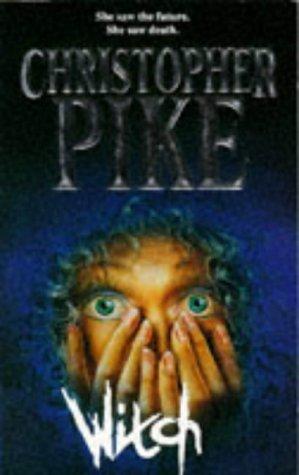
I used to live in my local library when I was a kid. I had a few friends but I think the librarians knew me better than any of them. I’d spend hours scanning the shelves for new reads, usually horror, almost always in the adult sections (being, as we all were at that age, a fan of Stephen King), but occasionally I had a quick gander at the ‘teenage’ section. (YA didn’t seem to be have been invented as a publishing trend back then.) I avoided the imprints or books that had ‘teenage’ actually as part of the name or design; they would inevitably be a bit bleak, moralistic or just dull books I didn’t want to read. And one day, I discovered, quite by chance, a book called ‘Witch’. The author was the intriguingly named Christopher Pike.

The cover was dark, the image of a girl hiding her face behind her hands was little bit menacing, the title font unmistakably horror orientated and the plot description hooked me enough to add it to my pile. I had other books I was itching to read first but back home, something compelled me to pick this one up first. And that’s where my Pike addiction began. ‘Witch’ was, pardon the pun, spellbinding. I finished the book almost in tears, both because of the story and because I realised I’d found someone who wrote the sort of stuff I wanted to read, who knew instinctively what ticked every literary box for my 15 year old self.. In the same way that ‘The Goonies’ was the adventure every kid wished they could have, Pike knew that what teenagers really wanted was to be free of adult constraints and making their own way, even if their best friend did turn out to be a deranged psychopath.

Pike’s early stuff was relatively straight forward; often more mystery than horror and firmly rooted in the suburbs of white picket America, he wove tales of the secrets and lies that bubble underneath blooming teenage romances and friendships, erupting in jealousy, rage and always, of course, murder. He gradually moved towards less formulaic and more sophisticated stories that encompassed witchcraft, reincarnation, magic and aliens and later books feature, often a little heavily, elements of ancient Indian folklore and mysticism, something Pike may have had a clear love for but was often over-egged in too many stories.

But I hold his books in particular regard because he loved a misfit – growing up as a gay kid, with little in the way of inspiring characters, Pike’s love of those teens that live outside the norms was a breath of fresh air. Not just token stereotypes to be picked off, he put them centre stage confronting the evil or leading the charge while your typical jock and cheerleader cut outs, the staple fare of many teen horror books at that time, were usually the cannon fodder. It was a call to arms I’d rarely seen in a teen book. He took teenagers and their world seriously, and while many argued he over indulged on violence, bad language and sex, I’d argue he simply didn’t talk down to teenagers and pretend those issues didn’t exist or cause harm.

I had a near brush with meeting the man himself when Books for Keeps, one of the teenage book magazines I used to write for when I was still at school and university, arranged for me to go to his publisher’s offices on a rare trip to the UK. Sadly, a rail strike scuppered that encounter and I went to Alton Towers instead. Fate, in her fickle way, shone on me again a few years later when Young Book Trust magazine, another of my regular gigs, arranged for me to interview him. The man called me from Santa Barbara and after about an hour, I put the phone down, a nervous, gibbering, awestruck fanboy. The subsequent interview, in hindsight, is pretty terrible but I can’t deny it was a pretty amazing feeling to know I’d talked to him. I am glad I lost the tape of it years ago though so no one will ever hear the sound of me fawning!

Most of his stuff appears to be if not out of print, then available haphazardly or bundled together in omnibus additions aimed squarely at a female readership. But his books feature wonderful interplay between boys and girls, and they have never been exclusively for girls, even in slightly soppier stuff like the spiritual 'Sati', featuring a young girl who claims she is God. I hope that his books receive a well deserved re-release so this generation of readers, girls AND boys, can experience the joys and horrors of adolescence, Christopher Pike style. Growing up was never so dangerous or so much fun.

~~~


Christopher Pike recommended reading list:


1) Master of Murder – a twisty, complex mystery that shows Pike is as good, if not better, when not dwelling in the supernatural.

2) Witch – the first Pike book I ever read and it broke my heart. It’ll break yours too.

3) Monster – the best opening of any Pike novel ever and an utterly brilliant horror novel.

4) The Season of Passage – a genre blending adult novel of SF and horror, terrifying and beautiful in equal measure.

5) Final Friends - strictly, a trilogy, but Pike is at his best when tackling fractured friendships that result in bloodshed.

6) Remember Me – a since well worn plot device of a story told through the eyes of a dead person that still felt fresh when Pike used it, Remember Me is about realising when it’s time to move on and to be happy for those left behind. It’s a wonderful story, sadly done little justice by a couple of unnecessary sequels.


~~~

Huge thanks to Jon for taking the time to share this with. I promise to try to spend more time on 'My Life That Books Built' in the future. If any other publicity people or bloggers fancy writing a guest post in a similar vein then it would be very gratefully received.